

You are using an out of date browser. It may not display this or other websites correctly.
You should upgrade or use an alternative browser.
You should upgrade or use an alternative browser.
Fortis - omaž IWC-u
- Thread starter Don_Krstic
- Start date
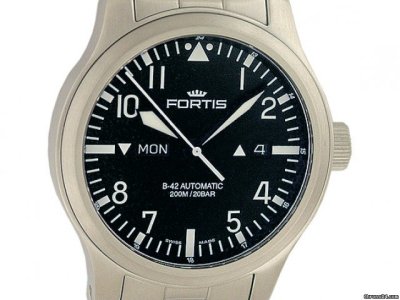
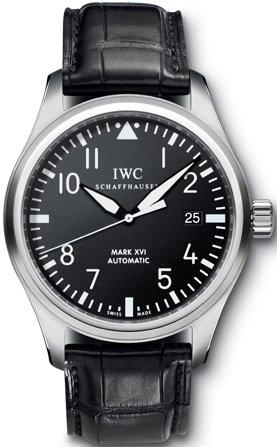

vladas
Moderator
Mislim da se radi o, uslovno rečeno, univerzalnom - pilotskom dizajnu koji nije izmislio samo IWC.
Doduše, IWC je bio u velikoj petorci:
A. Lange & Söhne
Laco (Lacher & Co)
Stowa (Walter Storz)
Wempe (Chronometerwerke Hamburg)
IWC
Ovih 5 proizvođača su pravili WW II B-Uhr (Beobachtungsuhr) Flieger satove. Fortis, kao i mnogi drugi (Steinhart, Archimede, Aristo) samo pravi "homage" prvobitnim pilotskim satovima.
Doduše, IWC je bio u velikoj petorci:
A. Lange & Söhne
Laco (Lacher & Co)
Stowa (Walter Storz)
Wempe (Chronometerwerke Hamburg)
IWC
Ovih 5 proizvođača su pravili WW II B-Uhr (Beobachtungsuhr) Flieger satove. Fortis, kao i mnogi drugi (Steinhart, Archimede, Aristo) samo pravi "homage" prvobitnim pilotskim satovima.
Last edited:


ANGEL II
New member
IWC-jeva Mark serija počinje još iz I s.rata ako se ne varam i ako me pamćenje služi, to je kopija izgleda baš iz tog vremena, kod Fortisa je modernizovano, današnjica!

Slika pozajmljena sa googla
br.1. Mark XI 1948.
br.2. Fliegeruhr W.W.W. der Royal Air Force "Mark X" 1944.
br.3. Spezialuhr für Flieger "Mark IX" 1936-40.
br.4. Big Pilot Watch cal.52 SC. 1940.
Slika pozajmljena sa googla
br.1. Mark XI 1948.
br.2. Fliegeruhr W.W.W. der Royal Air Force "Mark X" 1944.
br.3. Spezialuhr für Flieger "Mark IX" 1936-40.
br.4. Big Pilot Watch cal.52 SC. 1940.
Last edited:
Don_Krstic
New member
Fortisov 595.10.46. je identičan onom LANGE & SOHNE sa linka koji si postavio...
Moje neko zapažanje se odnosi samo na preterano sličan dizajan Fortisa IWC-u, što bi meni predstavljalo veliki minus za sat od 800 evra... Inače mnogo mi se sviđa taj WW II izgled satova...
Preteče me Angel...
To je prava kolekcija...
Moje neko zapažanje se odnosi samo na preterano sličan dizajan Fortisa IWC-u, što bi meni predstavljalo veliki minus za sat od 800 evra... Inače mnogo mi se sviđa taj WW II izgled satova...
Preteče me Angel...
To je prava kolekcija...

vladas
Moderator
Malo sam prepravljao svoj prethodni post, pa ne znam da li ste videli detalje.
Generalno - Luftwafe je trazila proizvodjace za osmatracki sat - Beobachtungsuhr - skraceno B-Uhr i satove je proizvodilo pet gore pomenutih prizvodjaca.
U originalu - satovi su bili velikog precnika - 55mm kako bi bili uocljivi. Takodje su se nosili preko rukava jakne, pa su i zato bili veci. Bilo je zahtevano da kazaljke i oznake na ciferu imaju iluminaciju kako bi se lako uocavali tokom nocnih letova. Ovde kao i ovde se moze naci nesto vise interesantnih informacija.
Evo i nesto vise o specifikacijama (na nemackom i engleskom, zahvaljujuci Crusader-u sa WUS-a):
Generalno - Luftwafe je trazila proizvodjace za osmatracki sat - Beobachtungsuhr - skraceno B-Uhr i satove je proizvodilo pet gore pomenutih prizvodjaca.
U originalu - satovi su bili velikog precnika - 55mm kako bi bili uocljivi. Takodje su se nosili preko rukava jakne, pa su i zato bili veci. Bilo je zahtevano da kazaljke i oznake na ciferu imaju iluminaciju kako bi se lako uocavali tokom nocnih letova. Ovde kao i ovde se moze naci nesto vise interesantnih informacija.
Evo i nesto vise o specifikacijama (na nemackom i engleskom, zahvaljujuci Crusader-u sa WUS-a):
Grundsätzlich ist es so, dass das Muster der mit Leuchtmasse belegten Indices differenziert sein sollte, damit im Dunkeln eine Orientierung, welcher der Indexe die 12 repäsentiert, möglich ist. Man kann sich da in der Eile und im Dunkeln mal rasch um eine Stunde vertun - ist mir auch schon passiert. Da man früher manchmal nur die Indices, nicht aber die Zahlen auf dem Zifferblatt selbst, luminiert hat, bot sich an, den Index auf 12 durch eine andere Form gegenüber den anderen Indices hervorzuheben - eben zwei seitliche Punkte, oder alternativ ein Dreieck, das nach oben zeigt.
Bei der B-Uhr hat es dann aber einen klaren Fall von "Overengineering" gegeben, weil alle bekannten und eigentlich redundanten Möglichkeiten zur Orientierung des leuchtenden Zifferblattes zur Anwendung kamen: Die Zahlen sind luminiert, dazu noch ein Dreieck und die Punkte (normalerwiese eine Alternative zum Dreieck). Aber dieses Muster war vom Reichsluftfahrtministerium so vorgegeben.
Nicht alle Militär- und Fliegeruhren haben das Dreieck - in Deutschland die B-Uhr, aber nicht z.B. die gleichzeitigen Fliegerchronographen von Hanhart und Tutima. In Großbritannien wurde das Dreieck in den 50er Jahren, bei der 2. Zifferblattvariante der Mark 11 eingeführt - bis dahin hatte man dort doppelte Punkte zur Hervorhebung des 12er-Index verwendet, und das Dreieck wird noch heute verwendet. In den USA wird für den Index bei 12 heute eine andersfarbige Leuchtmasse verwendet.
So here is a rough translation:
Ideally, the pattern of lumed indices should not be uniform so as to permit orientation of the dial in the dark and to determine which index represents 12. In darkness, or hurry, one can easily be off by an hour unless the indices are differentiated. As in earlier times only the indices, not the numbers, were lumed, it was advisable to distinguish the index at 12 by a different shape - either two dots left and right of the index, or, alternatively, an upwards-pointing triangle.
The B-Uhren represent a serious case of over-engineering as all available and redundant types of differentiation were rolled into it: the numbers are lumed, there is the triangle plus the dots which are usually alternative to the triangle. This pattern was required by the German Air Ministry (Reichsluftfahrtministerium) in WWII.
Not all military and aviation watches have the triangle - in Germany the B-Uhren do, but not the contemporary aviation chronographs by Hanhart and Tutima. In the UK the triangle replaced the double dots in the the 2nd dial variant of the Mark 11 in the 1950s, and the triangle is still a feature today. In the US the index by 12 is marked by lume of a different color today.
Last edited:


milan zmaj
New member
Šta vi mislite o ovoj sličnosti? Mene bi to odbilo od kupovine ovog Fortis modela, i ako se radi o dosta dobrom satu.
nisam citao ostale postove ali zasto tako mislis...pa na neki nacin mi je i lepsi Fortis ne kazem kvalitetniji ali lepsi...sinoc sam ih probavao i prelepi
nisam citao ostale postove ali zasto tako mislis...pa na neki nacin mi je i lepsi Fortis ne kazem kvalitetniji ali lepsi...sinoc sam ih probavao i prelepi
Potpuno se slazem sa Milanom. Prvo Fortis bas pravi pilotske satove, a tu se dizajn i nije mnogo menjao. Ali bas Fortis, po meni, ima jako prepoznatljiv dizajn. Sa druge strane, konkretnon ovaj IWC mi je jedan od najruznijih modela koje je IWC uradio. Nekako mi je dedast, ako ste me razumeli sta sam hteo da kazem.
Don_Krstic
New member
Ne želim ništa loše o Fortisu da kažem, čak naprotiv veliki broj njihovih satova mi se sviđaju.... Nego eto samo taj jedan njihov model B42 Flieger me mnogo podsetio na Mark XVI što je meni malo glupo, jer uvek bih težio da kupim pre njega nego Fortisa zato što mi deluje autentičnije... Inače taj IWC mi je mnogo lep i kako patek kaže dedinski izgled mi i jeste njegov najveći plus jer ima bezvremenski dizajn...
Slično Steinhart pristupa dizajnu svojih satova koji su skoro pa identični nekim Rolexovim modelima, ali razlika u ceni je dosta izraženija nego u ovom slučaju pa to donekle ima smisla, ali eto i u tom slučaju me to odvraća od kupovine bilo kog njihovog sata i ako imaju dobar odnos cena kvalitet...
Ja se ne bih lepo osećao noseći takav sat koji je preslikan model nekog skupljeg i kvalitetnijeg...
Slično Steinhart pristupa dizajnu svojih satova koji su skoro pa identični nekim Rolexovim modelima, ali razlika u ceni je dosta izraženija nego u ovom slučaju pa to donekle ima smisla, ali eto i u tom slučaju me to odvraća od kupovine bilo kog njihovog sata i ako imaju dobar odnos cena kvalitet...
Ja se ne bih lepo osećao noseći takav sat koji je preslikan model nekog skupljeg i kvalitetnijeg...

Don_Krstic
New member
Izgleda da sam ja to malo preozbiljno shvatio, jer sad kad iščitah ove tekstove i malo više prošnjurah na netu videh i potvrdih ono što mi Angel, Vlada i Milan rekoše da u stvari svi oni kopiraju taj jedan dizajn... Dok Steinhart bukvalno i namerno kopira Rolexa...
milan zmaj
New member
Pa onda onda uzmi ga onda i dobices popust...
Don_Krstic
New member
Ma običan Flieger Automatic 595.11.41 mi je trenutno na nišanu, ali to ništa pre septembra...
Similar threads

- Replies
- 11
- Views
- 459
