milan zmaj
New member
Pilot watches
During the Second World War further technological advancements to military watches were made.
In Aviation “Pilot” or “Navigator” watches were born. Pilot watches were developed due to the need in Aviation for the precise measurement of seconds, to achieve this, watches were fitted with a “seconds bezel”.
Split second timing is crucial for military watches, especially in aviation since a deviation of only a few seconds could lead to huge navigational errors. So the seconds bezel was an important addition. It aided in navigation because the pilot could use this bezel to synchronize with the correct reference time before taking off. It was also useful for making adjustments to radio time signals whilst in flight so that “chronometer errors” and consequently navigational errors could be avoided.
During the Second World War further technological advancements to military watches were made.
In Aviation “Pilot” or “Navigator” watches were born. Pilot watches were developed due to the need in Aviation for the precise measurement of seconds, to achieve this, watches were fitted with a “seconds bezel”.
Split second timing is crucial for military watches, especially in aviation since a deviation of only a few seconds could lead to huge navigational errors. So the seconds bezel was an important addition. It aided in navigation because the pilot could use this bezel to synchronize with the correct reference time before taking off. It was also useful for making adjustments to radio time signals whilst in flight so that “chronometer errors” and consequently navigational errors could be avoided.
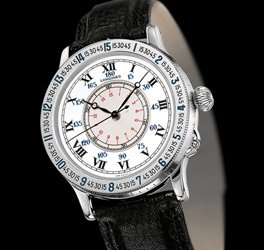
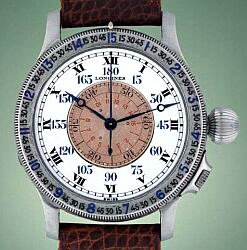
The Longines “Weems” with seconds bezel and center seconds. And the Lindbergh “Hour Angle”
source Longines
The Longines “Weems” pictured above released in 1929, was the first wristwatch specifically designed for aeronautical navigation. Named Weems after Professor Philip Weems of the US Naval Academy with whom Longines collaborated with on the watch’s design. Later in 1932 Longines would team up with famous aviator Charles Lindbergh to create their further improved “Hour Angle” watch (right)
During the Second World War further technological advancements to military watches were made.
In Aviation “Pilot” or “Navigator” watches were born. Pilot watches were developed due to the need in Aviation for the precise measurement of seconds, to achieve this, watches were fitted with a “seconds bezel”.
Split second timing is crucial for military watches, especially in aviation since a deviation of only a few seconds could lead to huge navigational errors. So the seconds bezel was an important addition. It aided in navigation because the pilot could use this bezel to synchronize with the correct reference time before taking off. It was also useful for making adjustments to radio time signals whilst in flight so that “chronometer errors” and consequently navigational errors could be avoided.
During the Second World War further technological advancements to military watches were made.
In Aviation “Pilot” or “Navigator” watches were born. Pilot watches were developed due to the need in Aviation for the precise measurement of seconds, to achieve this, watches were fitted with a “seconds bezel”.
Split second timing is crucial for military watches, especially in aviation since a deviation of only a few seconds could lead to huge navigational errors. So the seconds bezel was an important addition. It aided in navigation because the pilot could use this bezel to synchronize with the correct reference time before taking off. It was also useful for making adjustments to radio time signals whilst in flight so that “chronometer errors” and consequently navigational errors could be avoided.
The Longines “Weems” with seconds bezel and center seconds. And the Lindbergh “Hour Angle”
source Longines
The Longines “Weems” pictured above released in 1929, was the first wristwatch specifically designed for aeronautical navigation. Named Weems after Professor Philip Weems of the US Naval Academy with whom Longines collaborated with on the watch’s design. Later in 1932 Longines would team up with famous aviator Charles Lindbergh to create their further improved “Hour Angle” watch (right)


 Meni su nemački satovi sasvim dobar izbor, pogotovo npr. Damasko DA 36....